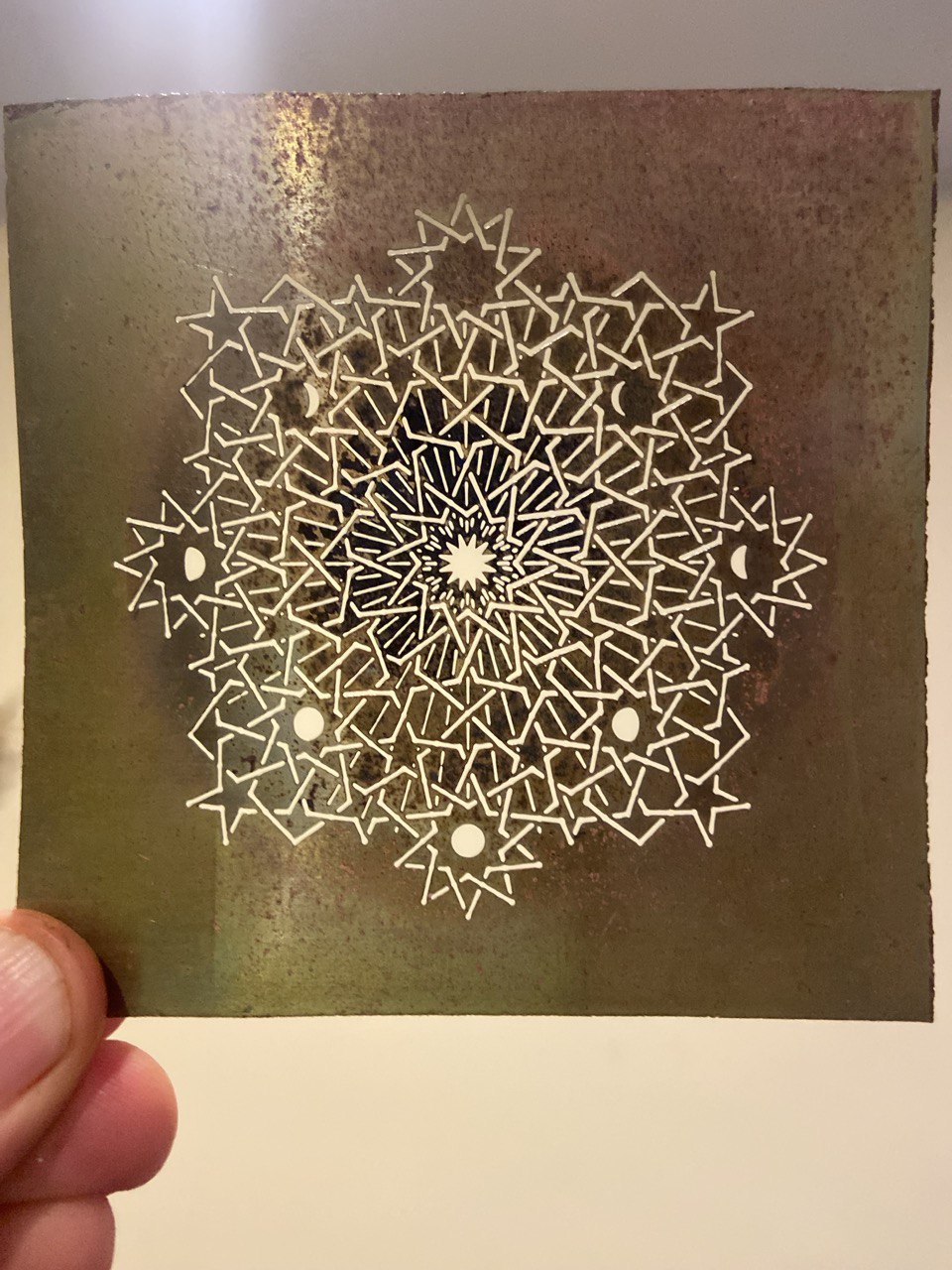
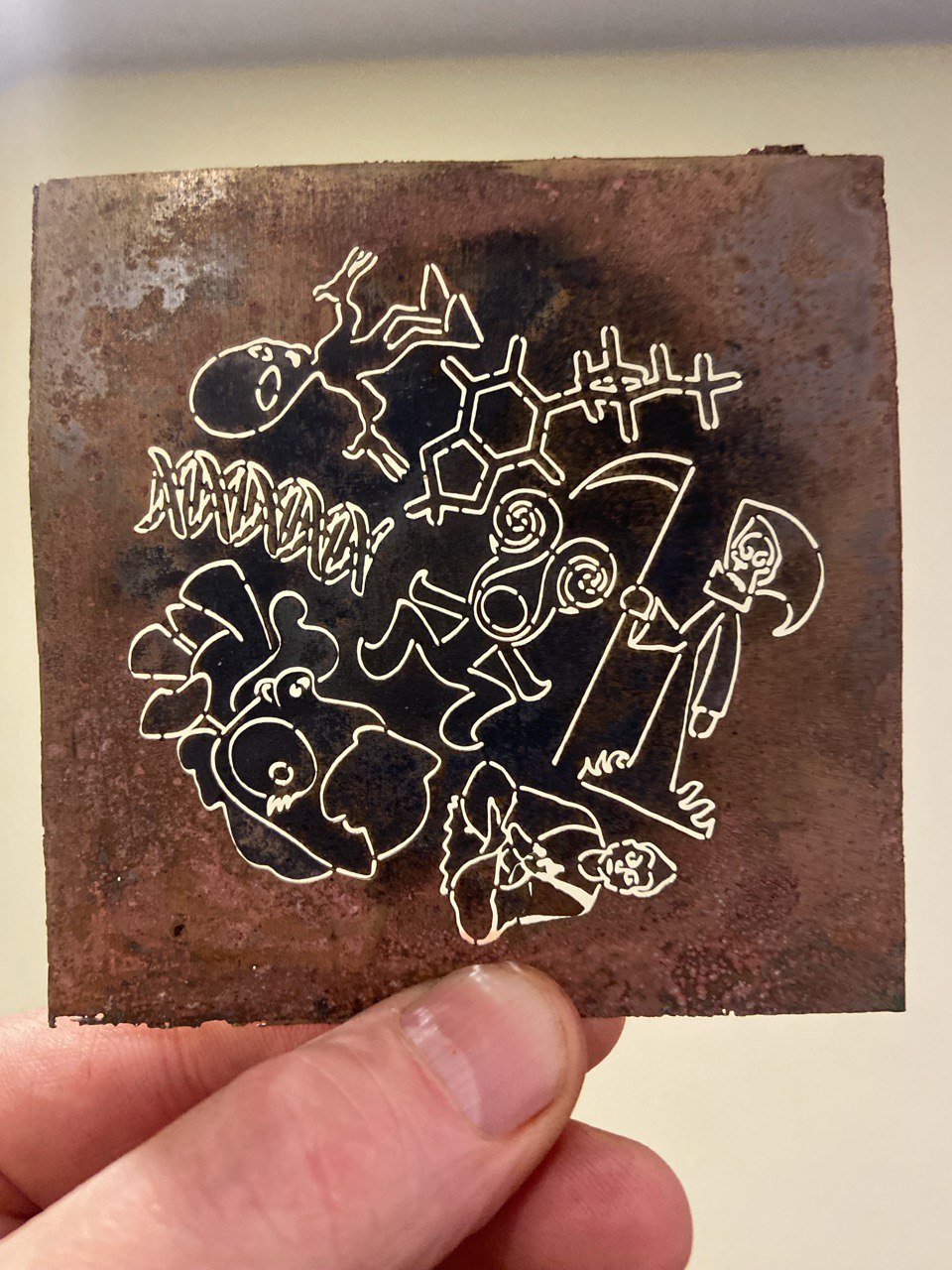
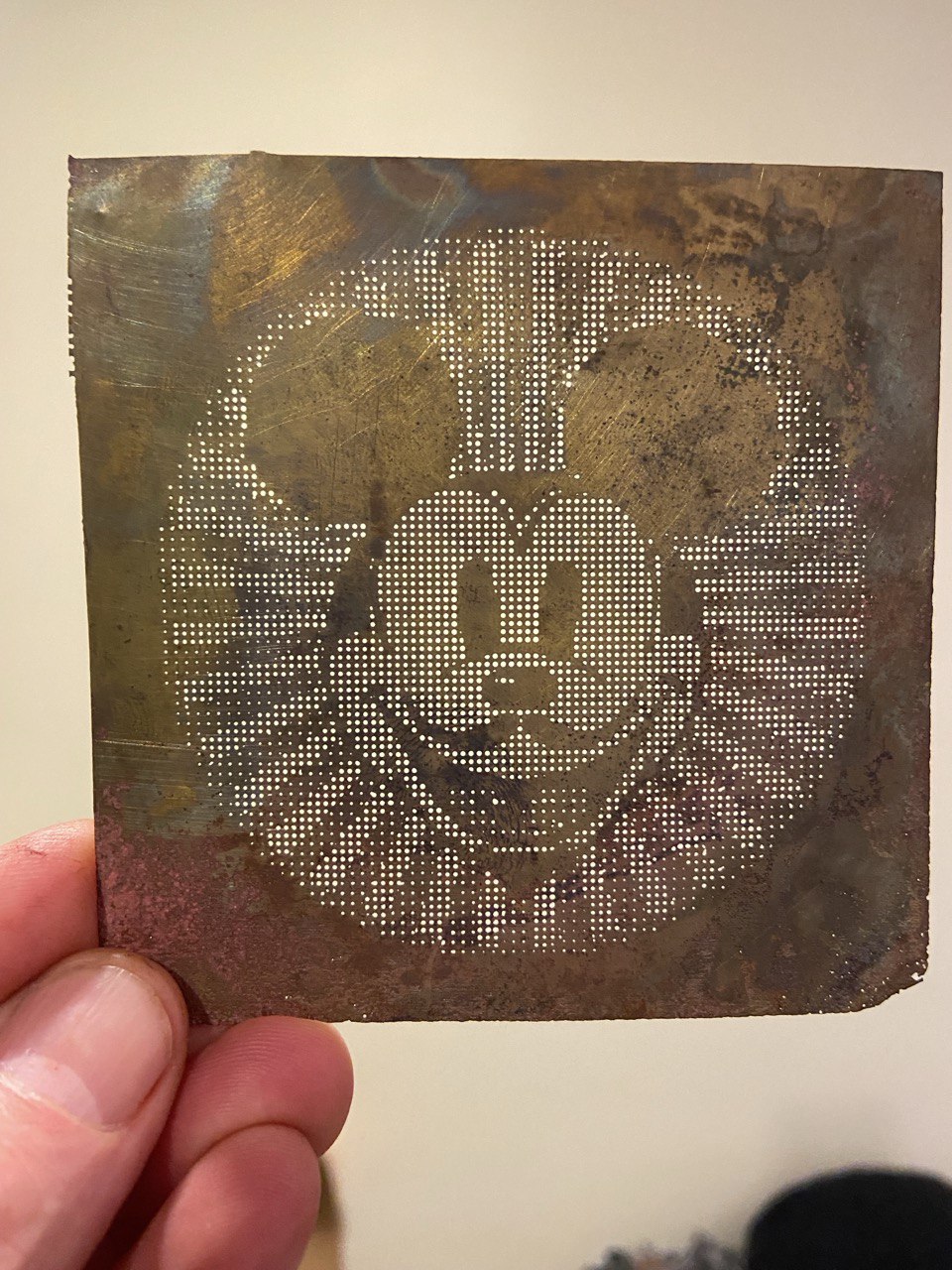
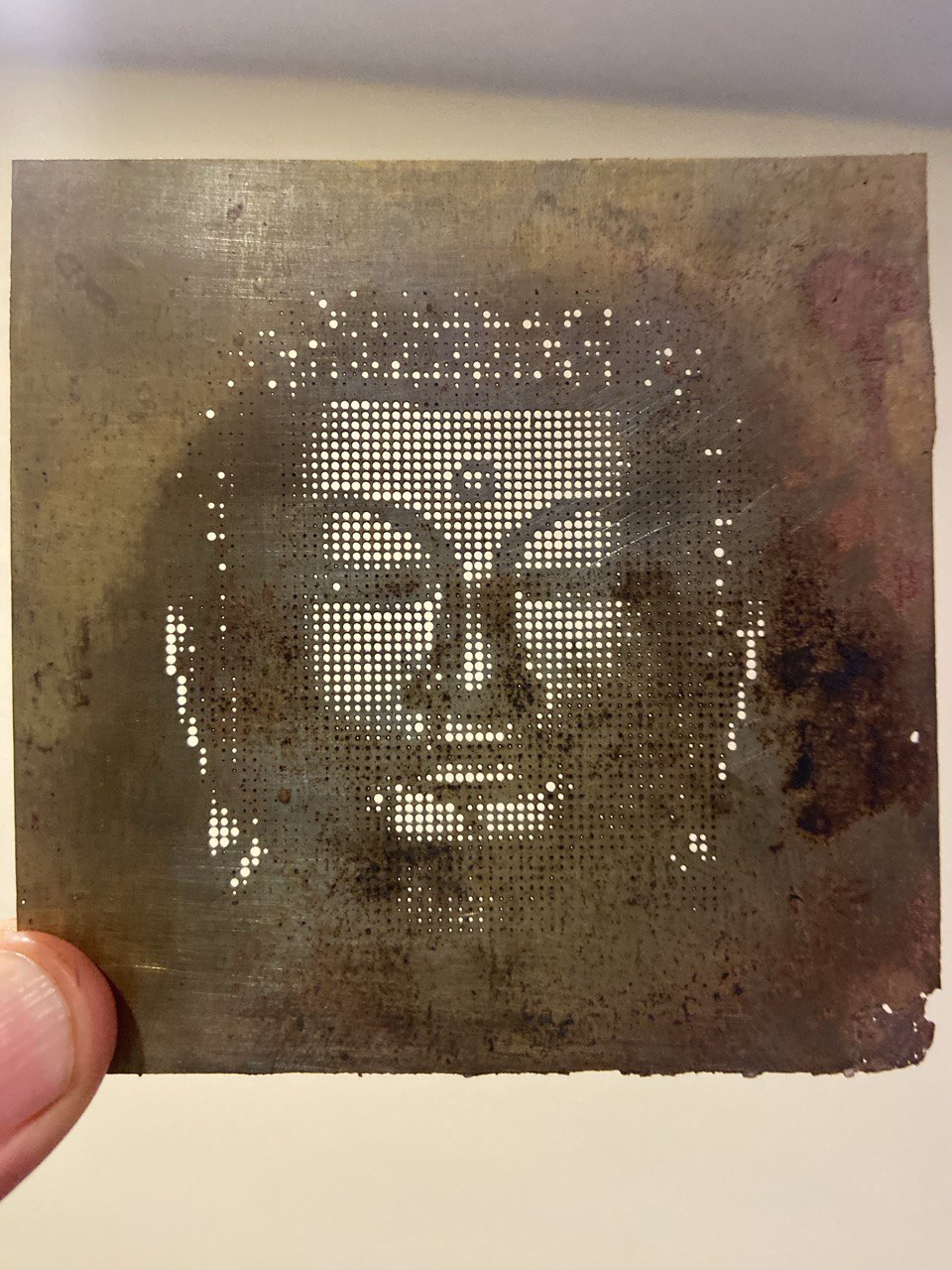
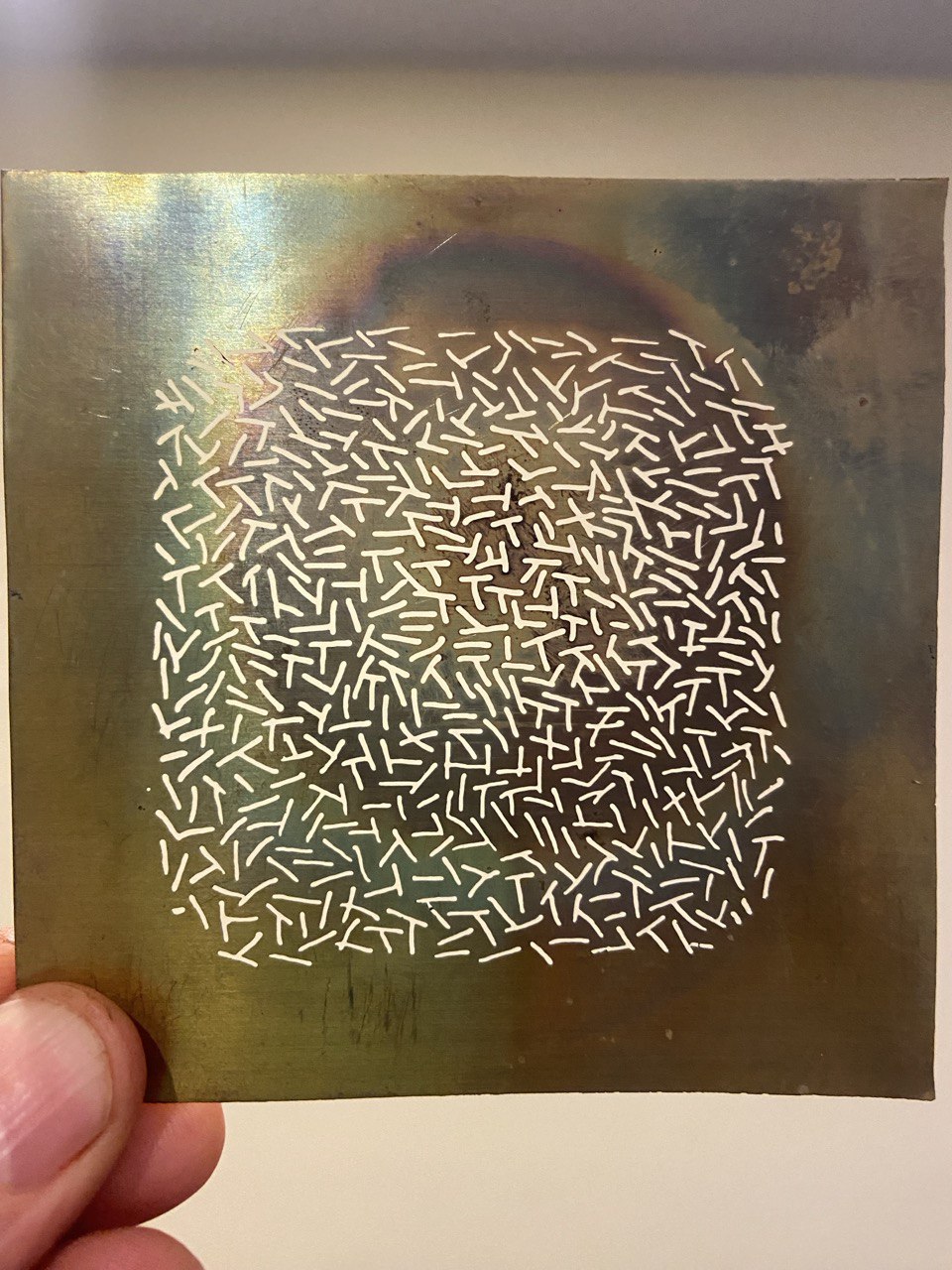
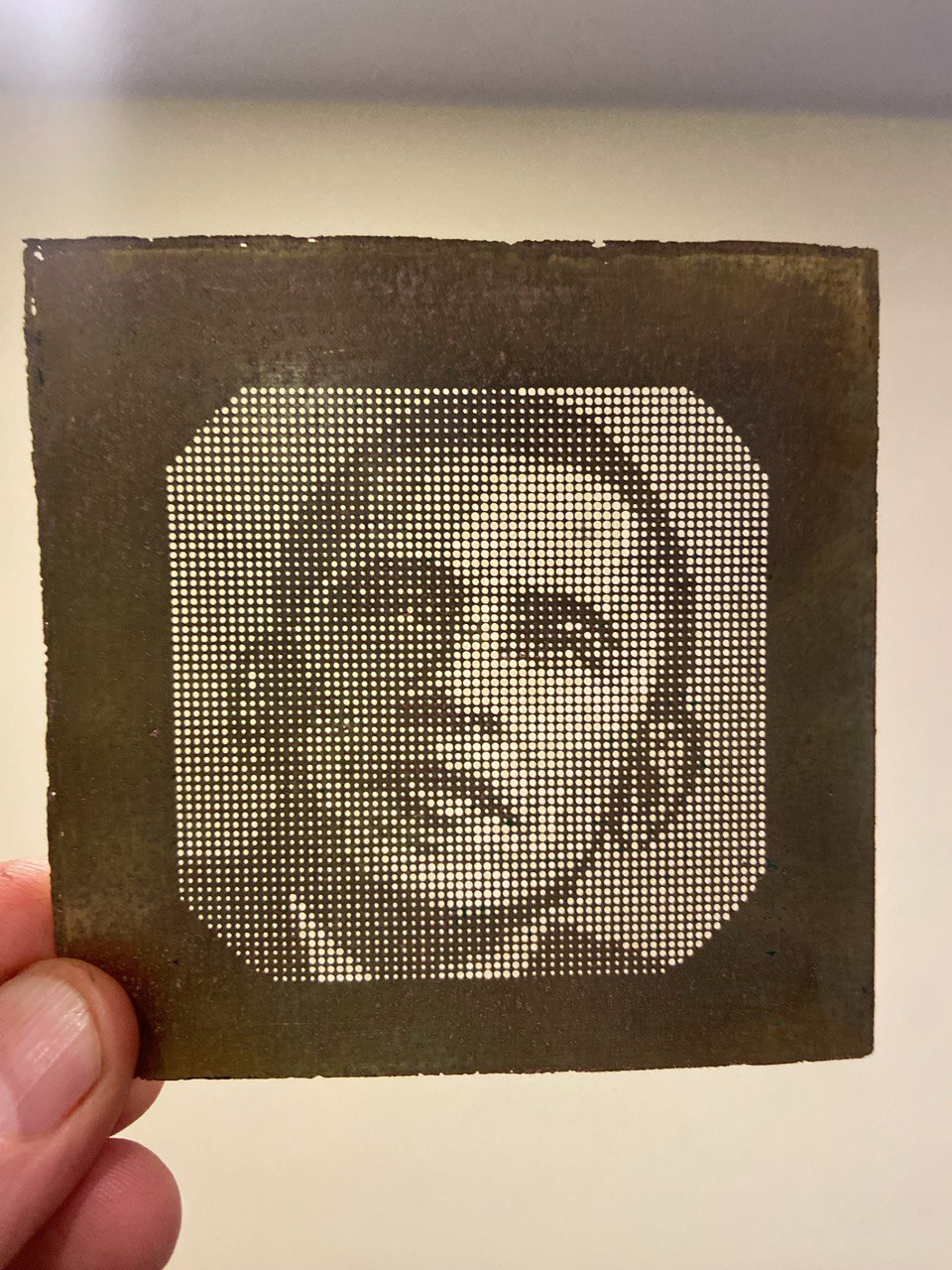
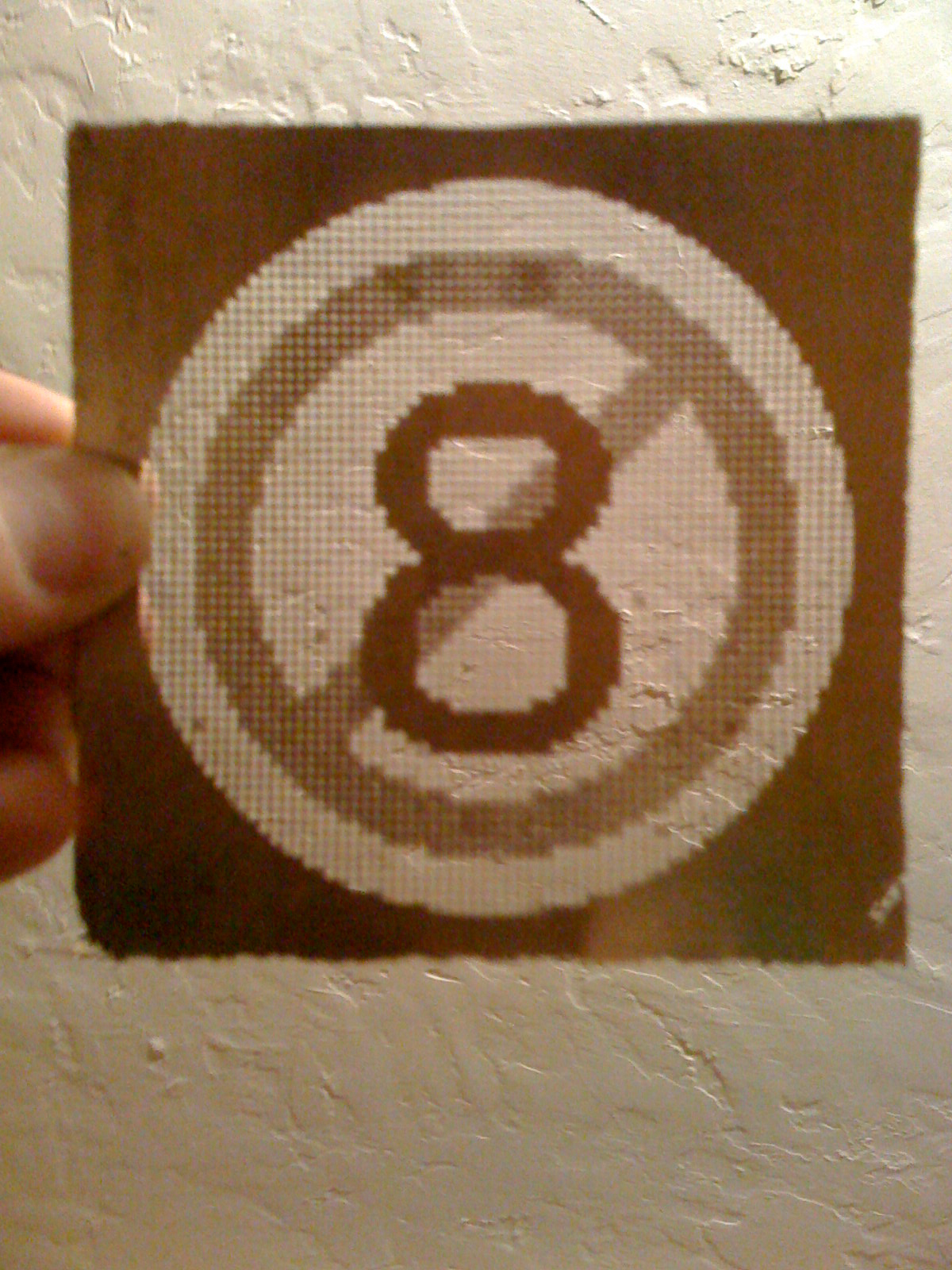
First attempts at projected masks — images imprinted onto transparencies and projected using an old slide projector. No photos of those installations survive. I was only partly satisfied with the results, which led to the development of the brass etching approach.
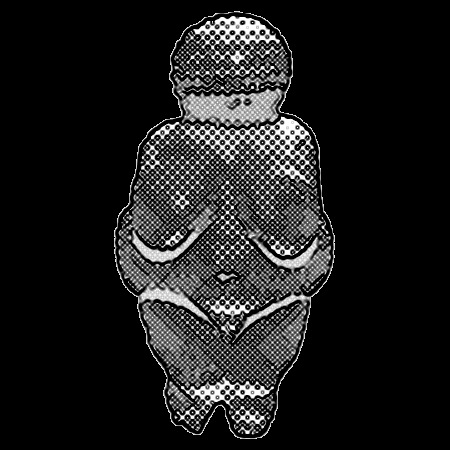
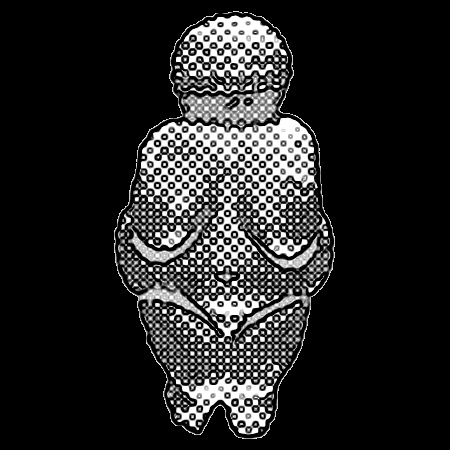
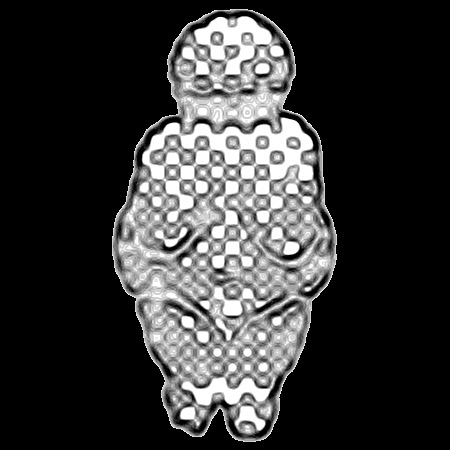
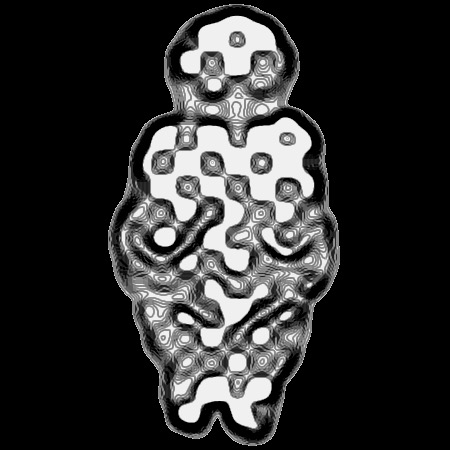
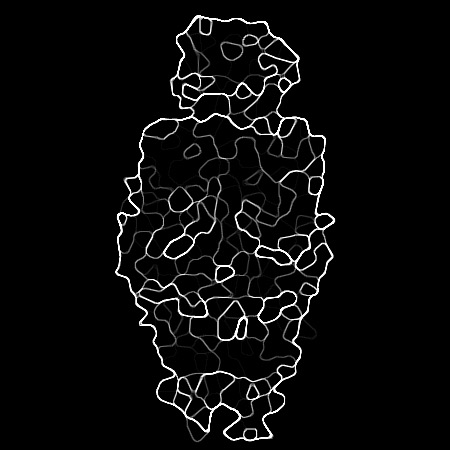
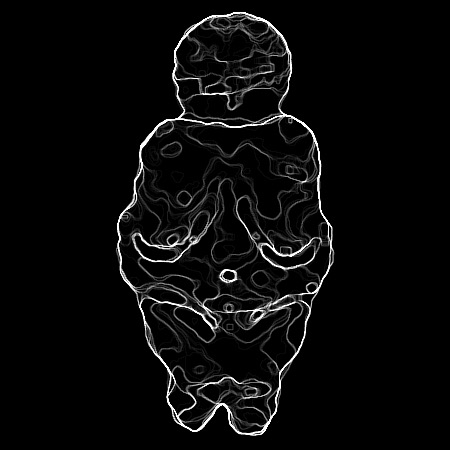
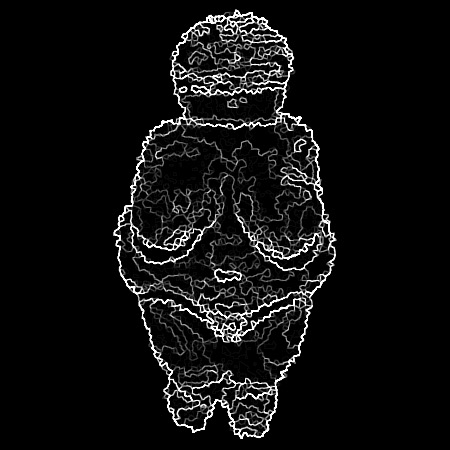
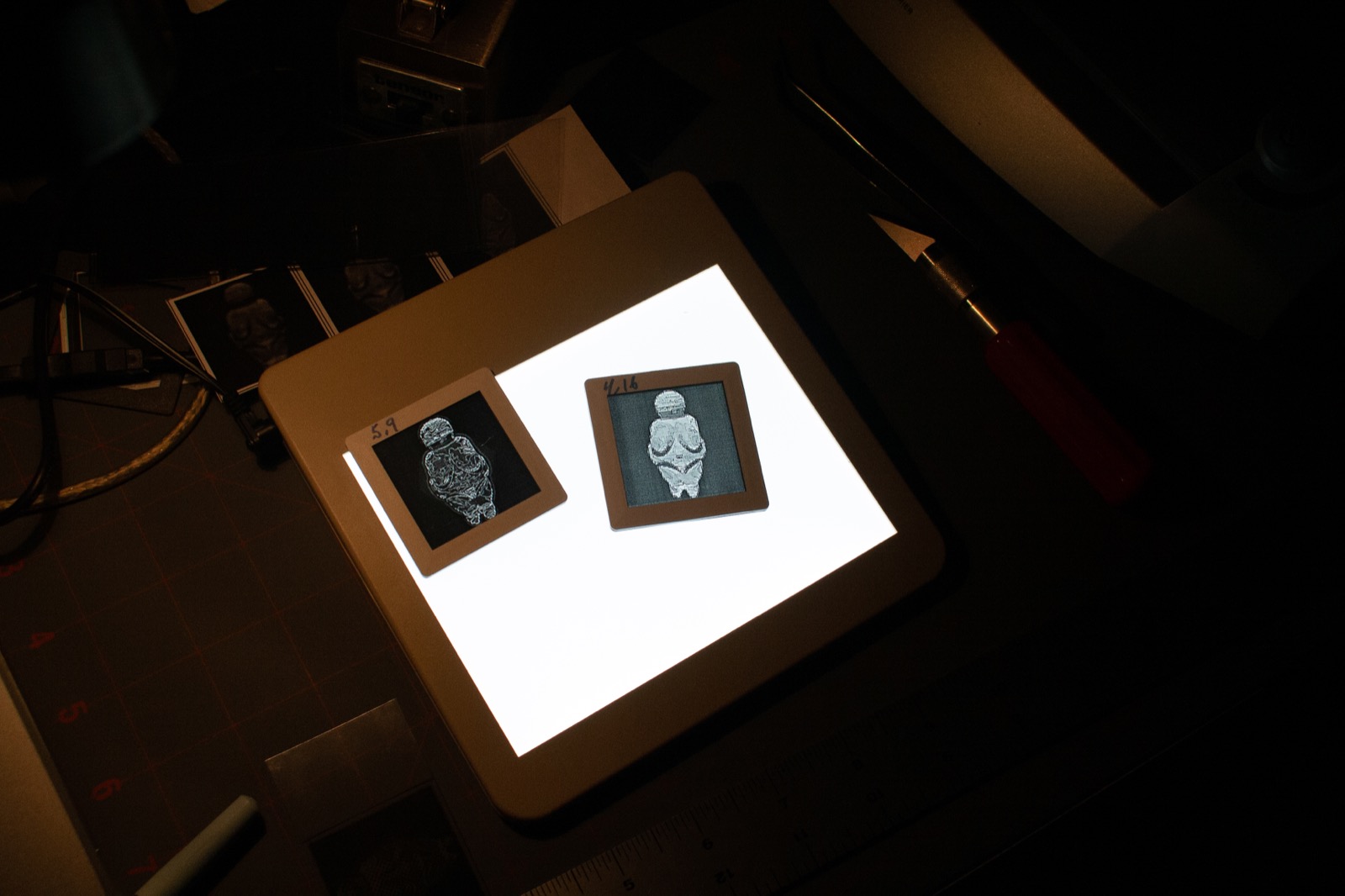
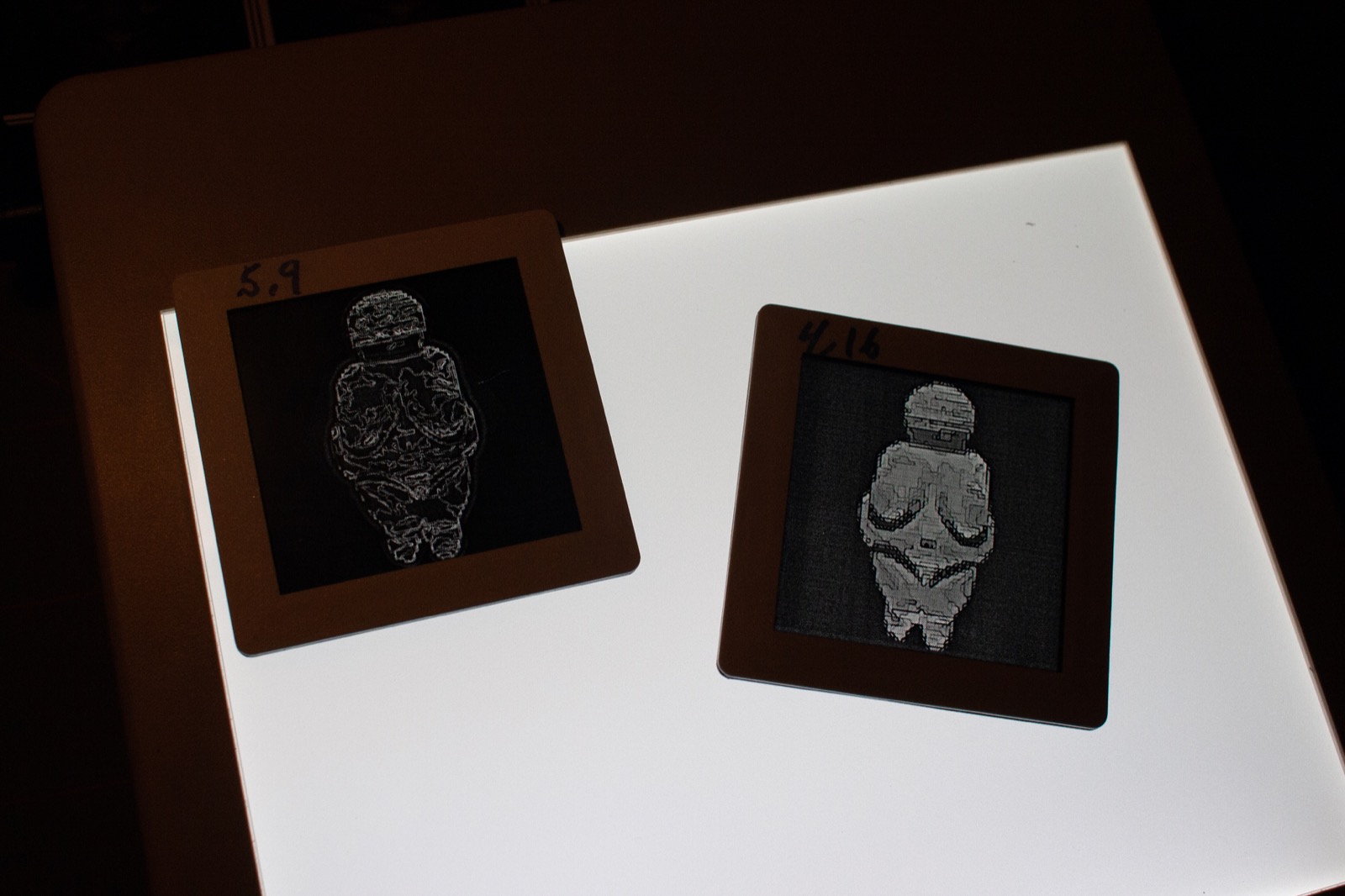
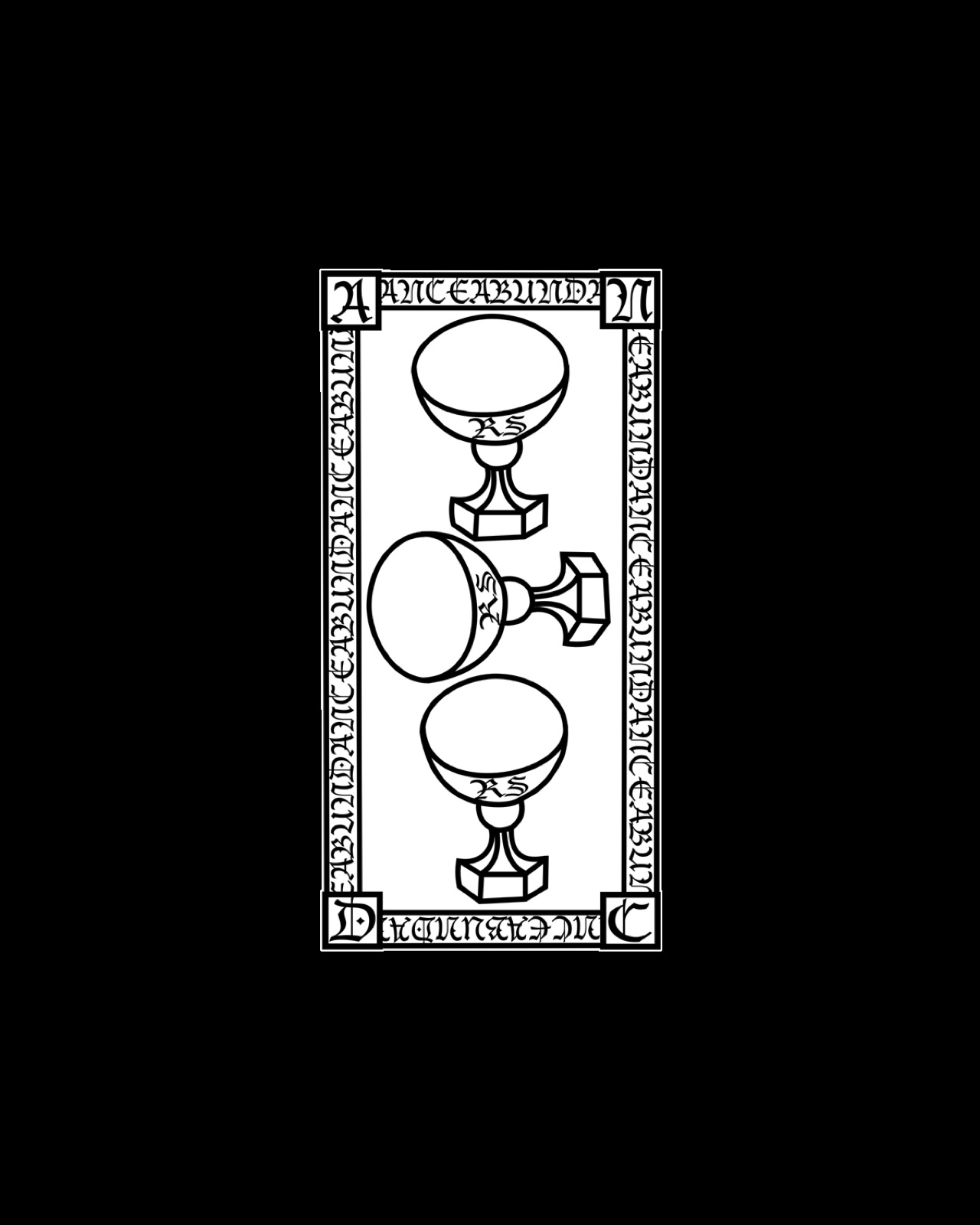
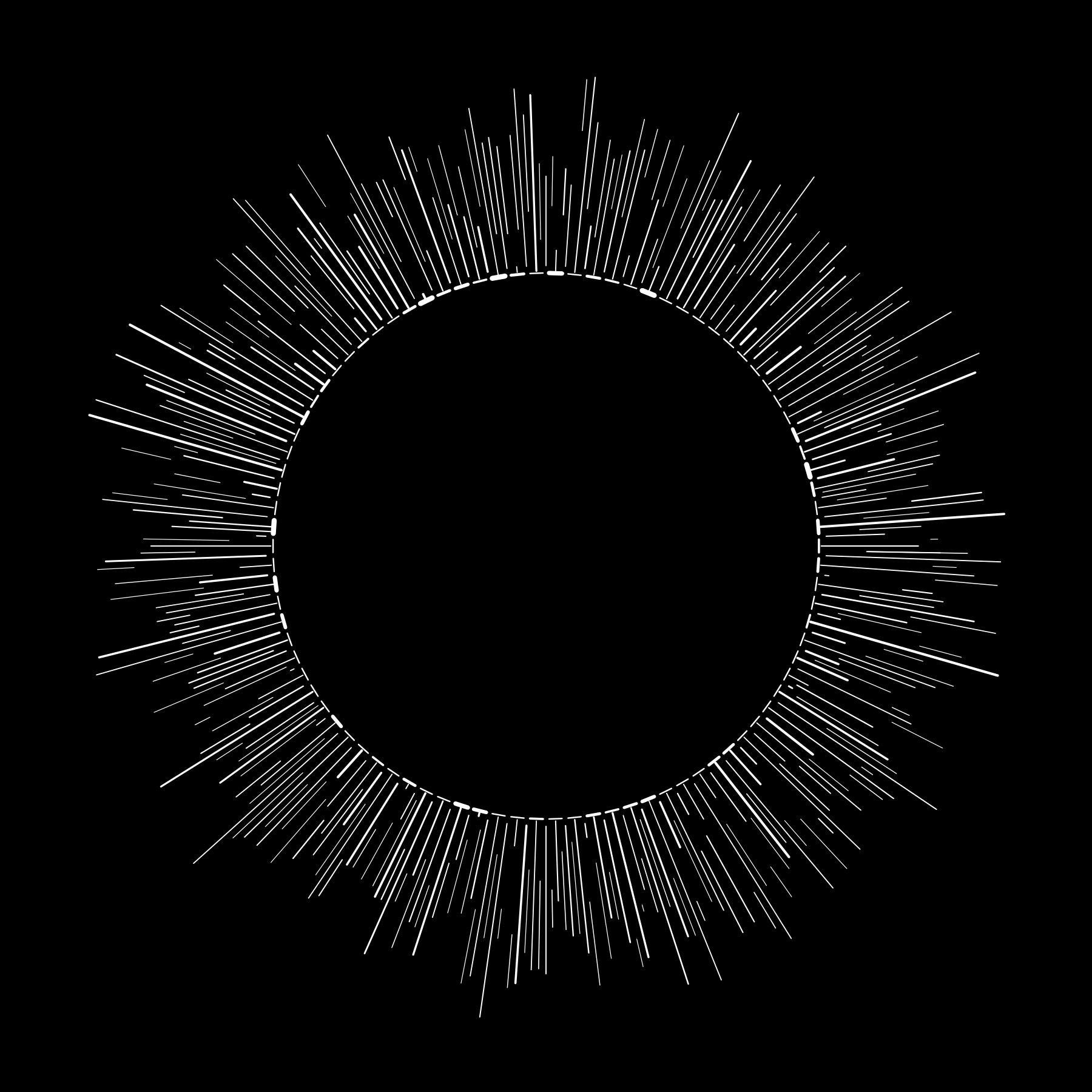
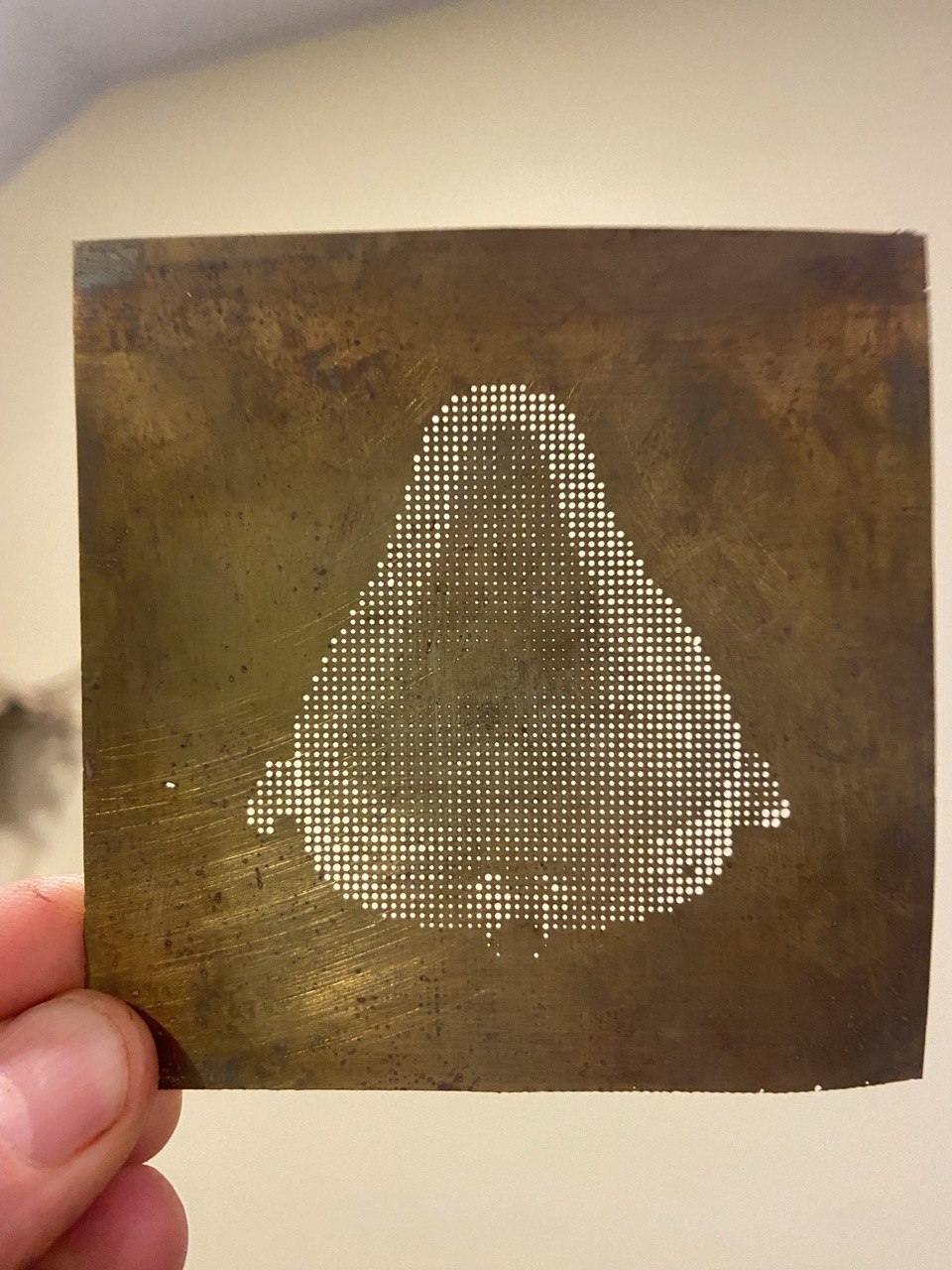
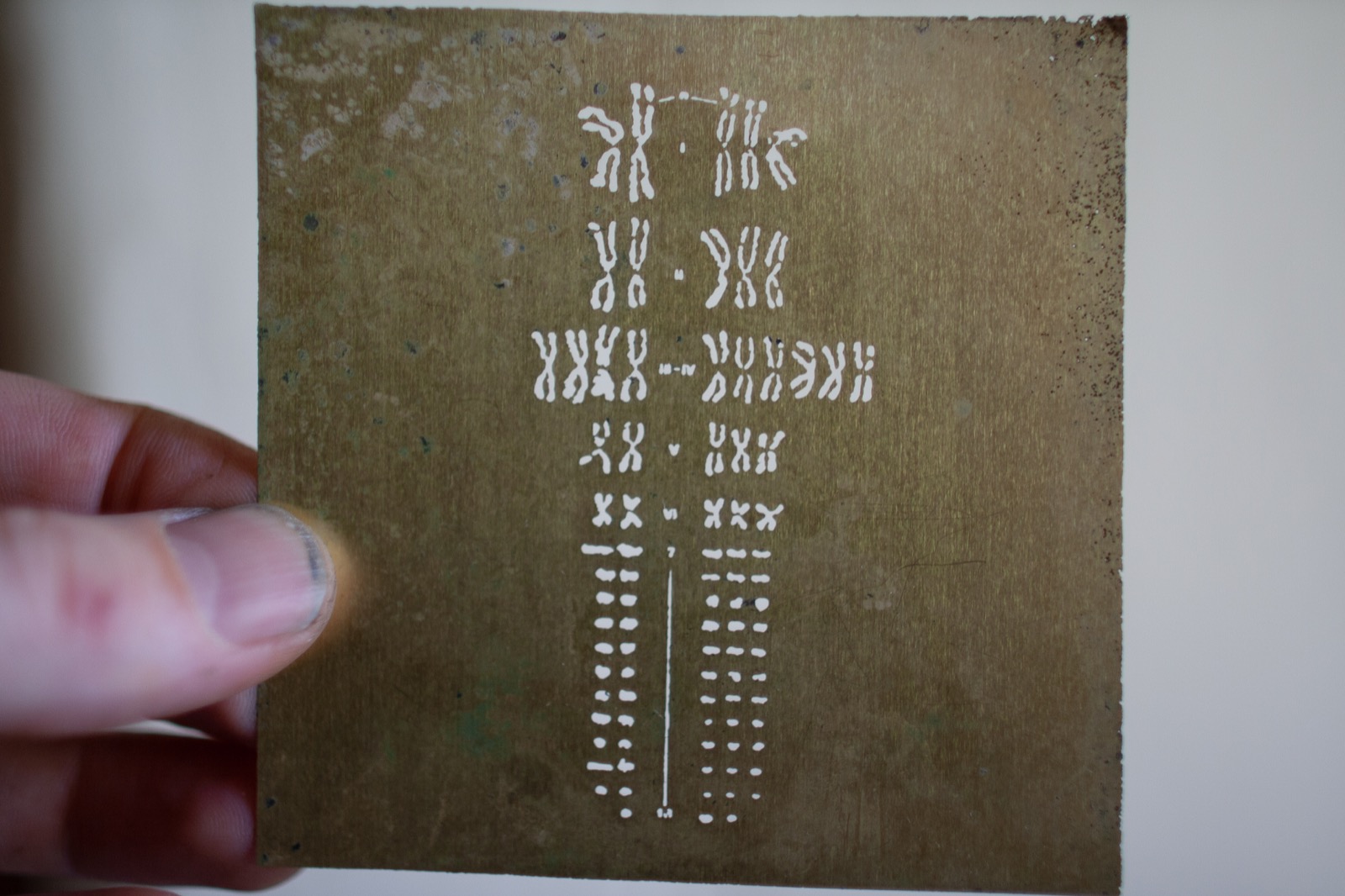
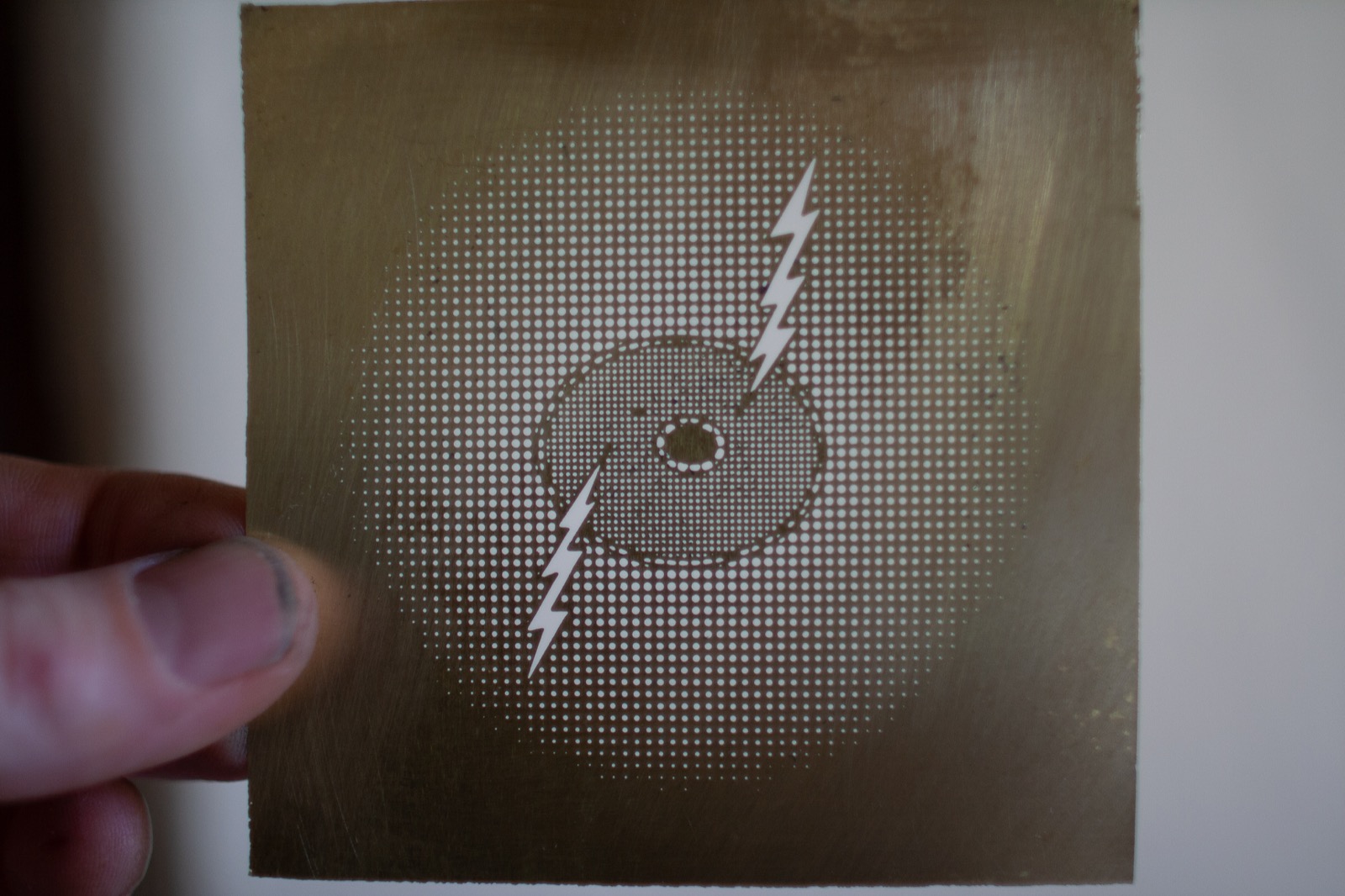
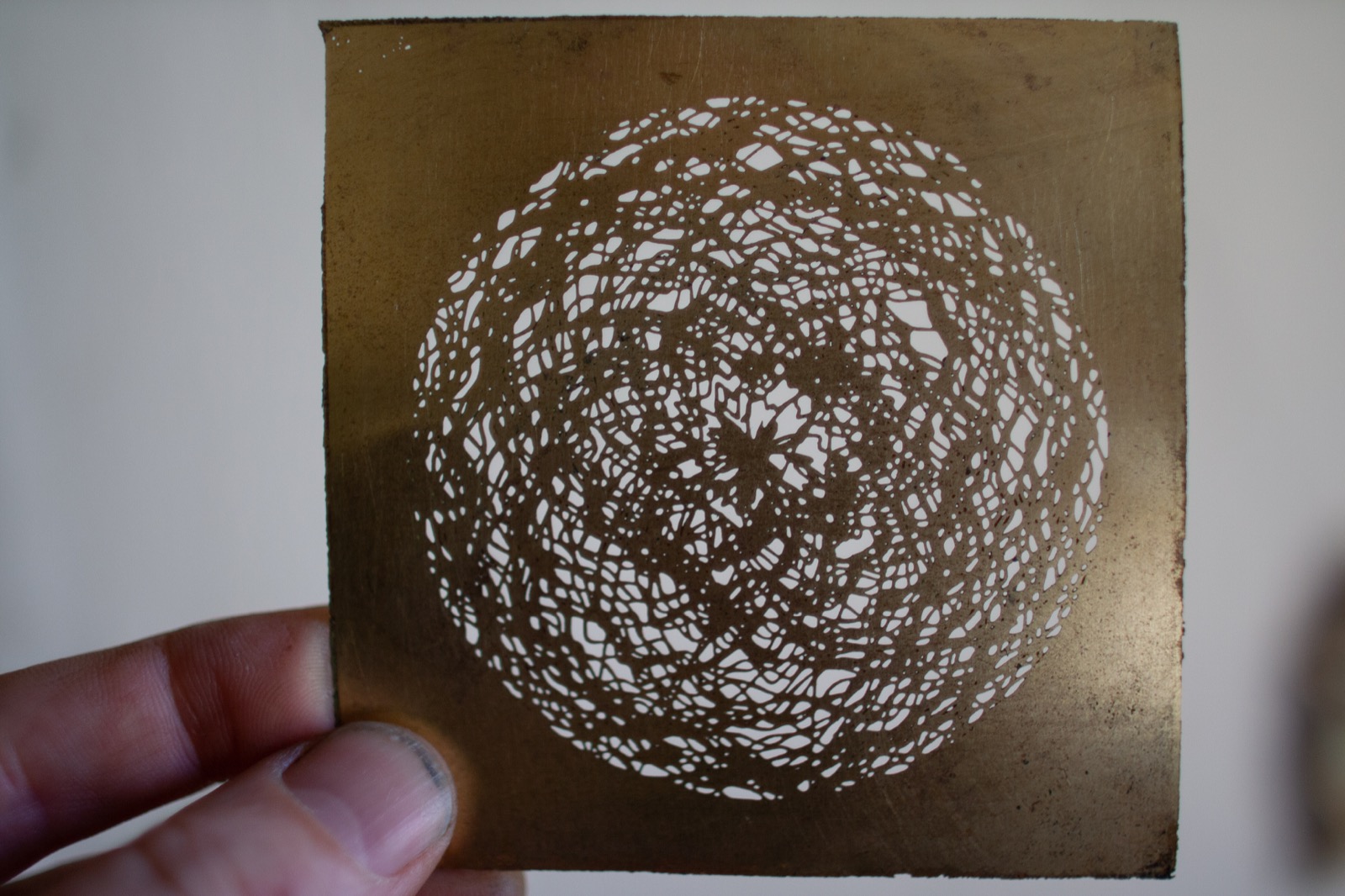
I was unsatisfied with the emulsion based techniques and moved to brass. Designs are laser-printed and toner-transferred to brass using a lamination machine. The back is coated with lacquer. The toner acts as an etch resist — the exposed brass is dissolved in a PCB tank with a bubbler. The etchant was cupric chloride — HCl-based, with the interesting quality of getting stronger the more it was used as dissolved copper became part of the etchant itself. After etching, the lacquer and toner are removed with acetone. Halftone patterns generated programmatically — varying dot size, line segments, or geometric cuts to create tonal images that project from Source Four theatrical lighting instruments.